Three things that interest you
Digital propaganda: in what ways does the internet change how easily people are affected by propaganda of their governments. To what extent has it given people the opportunity to research and discover different viewpoints? And to what degree do the algorithms, fake news, etc, worsen the tunnel vision brought forward by propaganda?
Privacy dilemma: to what extent is it acceptable to invade the digital privacy of people in a crime investigation? This includes tracking phone calls, reading messages, etc., of possibly totally innocent people.
Automated weapons: to what extent is it ethical to use technology in conflicts and wars, and how can the use of unethical technology be limited? E.g., if a drone kills a human based on how it is programmed, nobody is directly responsible for the murder.
How do we know about the world
I decided to read the text of ‘Research Method’ by Nicholas Walliman, because it appeared to be well-structured, with clear subheadings. This usually makes it easier for me to fully comprehend the content of a text. However I thought the few fragments I read from ‘Understanding research philosophies and approaches’ were also very interesting.
The following are a few research techniques that caught my attention:
- Ethnological: This approach seems especially interesting because it permits researchers to study real societies that they are also an active participant in. Rather than simulations and fake circumstances, it examines behaviour in a normal environment, with all variables such as social, cultural, and economic contexts included. However, it also looks like a challenging approach, because of the many unreliable factors, such as prejudices and hidden culture.
- Evaluation: Again I appreciate this method because it takes different aspects like political, social, cultural and contextual elements into account, therefore it is able to look at the broader picture. This broader approach seems useful to understand more complex systems and come to more nuanced conclusions.
- Cultural: I find the differences across cultures to be very intriguing, thus I think this kind of study sounds quite appealing. It looks at how many cultures interpret and interact in unique ways, which seems fascinating to observe.
The second chapter made me realize how important the philosophy behind research is, in order to give the research any meaning at all. The explanation of metaphysics with inductive reasoning and epistemology with deductive reasoning also provides an insight that it is near impossible to give a conclusion to research that is completely acceptable for everyone, however logical a conclusion may seem.
For me personally, it depends on the field of research what perspective I agree with most. For more exact sciences positivism seems like a rather good approach, whereas the other perspectives, like relativism, postmodernism and critical realism, might be better applicable to the social sciences. Especially postmodernism seems appealing to me, as it allows the researcher to open up to completely new realities, instead of building on previous, potentially inaccurate, knowledge.
Searching Reading and Reflection
After reading the article “Predictable Information Literacy Misconceptions of First-Year College Students,” I came to the conclusion that there is much room for improvement in my research approach. I can greatly identify with the other Freshmen from this research, especially the fact that I have never properly learned where to find my resources. However, I believe I made some progress throughout high school, moving from relying mainly on Wikipedia and other similar websites to trustworthy news websites and eventually even using some research papers as references.
I learned that there are more trustworthy sources of information besides Google Search after reading this article, like the libraries. It is important in my opinion, to make use of all the resources the university offers and learn how to navigate and select the most suitable ones, especially as we delve deeper into the topics we are studying.
Personally, I think the hardest part of adjusting to college research for me is finding these right resources. Mainly because research was previously labeled as ‘valid and credible’ as long as the author was known. However, I am now aware that it is preferable to have numerous articles supporting an argument and to thoroughly investigate the author’s credibility.
In conclusion, I believe there are still a lot of steps to be taken to improve the accuracy and reliability of the research I will do.
Locate & Evaluate practical
Topic of interest: The Ethics of Artificial Intelligence in Warfare
Criteria for the sources:
- Currency: how recent is the source published and to what extent is it still applicable today
- References: to what extent the author used other proper sources
- Objectivity: is the source showing different perspectives of the topic
- Authority: the trustworthiness and expertise from the author
- Relevance: to what extent is the source relevant for the chosen topic
- Depth: does the source delve into the more complex issues of the topic
Evaluation of the sources:
- ”Addressing ethical questions of modern AI warfare” IPS Journal, 21st May 2023, Hartwig von Schubert.
1. Currency: 5/5; 2. References: 1/5; 3. Objectivity 4/5; 4. Authority: 5/5; 5. Relevance: 5/5; 6. Depth: 3/5 - ”Who would be legally responsible if an AI controlled/autonomous army/unit commits a war crime?” Reddit, 2023, Samas34 and comments.
1. Currency: 5/5; 2. References: 0/5; 3. Objectivity 3/5; 4. Authority: 1/5; 5. Relevance: 4/5; 6. Depth: 1/5 - ”Military Applications Of Artificial Intelligence” RAND Corporation, 2020, Forrest E. Morgan, Benjamin Bourdeaux, Andrew J. Lohn, Mark Ashby, Christian Curriden, Kelly Klima, Derek Grossman.
1. Currency: 3/5; 2. References: 5/5; 3. Objectivity 5/5; 4. Authority: 5/5; 5. Relevance: 3/10; 6. Depth: 5/5 - ”Ukraine’s War Brings Autonomous Weapons to the Front Lines” WIRED, 24th Feb 2023, Morgan Meaker.
1. Currency: 5/5; 2. References: 1/5; 3. Objectivity 2/5; 4. Authority: 3/5; 5. Relevance: 3/5; 6. Depth: 2/5 - ”Military autonomous drones (UAVs) – from fantasy to reality. Legal and Ethical implications.” Elsevier, 2021, Anna Konert, Tomasz Balcerzak.
1. Currency: 4/5; 2. References: 5/5; 3. Objectivity 5/5; 4. Authority: 5/5; 5. Relevance: 5/5; 6. Depth: 4/5 - ”How militaries are using artificial intelligence on and off the battlefield” PBS, 9th Jun 2023, Ali Rogin, Harry Zahn.
1. Currency: 5/5; 2. References: 3/5; 3. Objectivity 4/5; 4. Authority: 3/5; 5. Relevance: 5/5; 6. Depth: 3/5 - ”Law and Ethics for Autonomous Weapon Systems: Why a Ban Won’t Work and How the Laws of War Can” Stanford University, The Hoover Institution, 2013, Kenneth Anderson, Matthew C. Waxman.
1. Currency: 3/5; 2. References: 5/5; 3. Objectivity 4/5; 4. Authority: 5/5; 5. Relevance: 5/5; 6. Depth: 5/5 - ”Weapons of War” TikTok, September 2023, Jazzyjes12.0.
1. Currency: 5/5; 2. References: 1/5; 3. Objectivity 3/5; 4. Authority: 0/5; 5. Relevance: 4/5; 6. Depth: 2/5 - ”Machines set loose to slaughter: the dangerous rise of military AI” The Guardian, 15th Oct 2020, Frank Pasquale.
1. Currency: 4/5; 2. References: 2/5; 3. Objectivity 2/5; 4. Authority: 5/5; 5. Relevance: 5/5; 6. Depth: 4/5 - ”Drones and the Future of War” YouTube, AL Jazeera English, 23rd Feb 2023, William Davies and Rory Challands.
1. Currency: 5/5; 2. References: 2/5; 3. Objectivity 5/5; 4. Authority: 3/5; 5. Relevance: 5/5; 6. Depth: 3/5
Organising and Annotating Academic papers
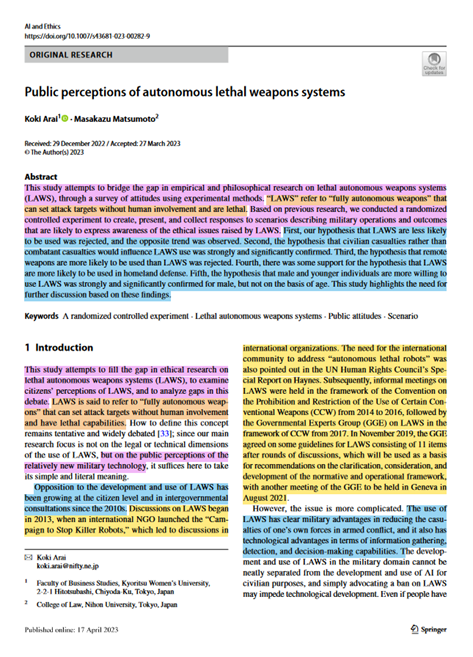
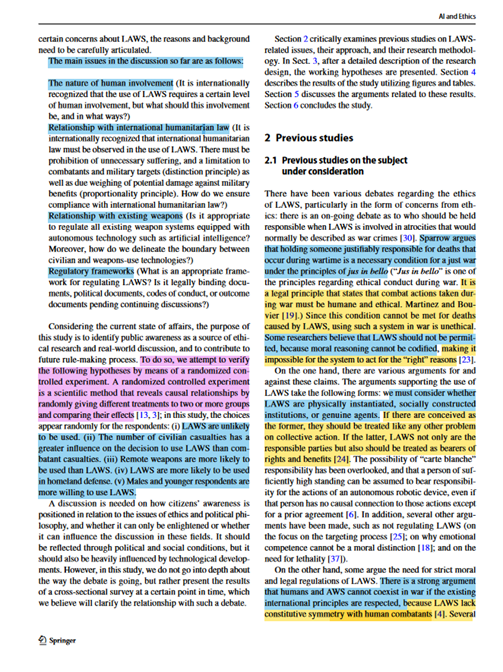
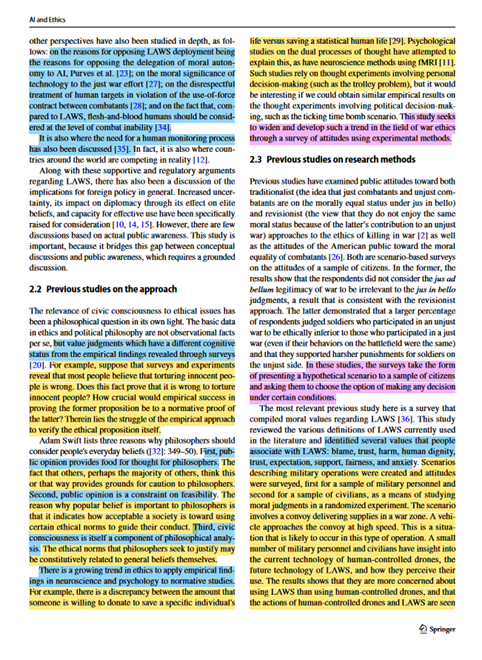
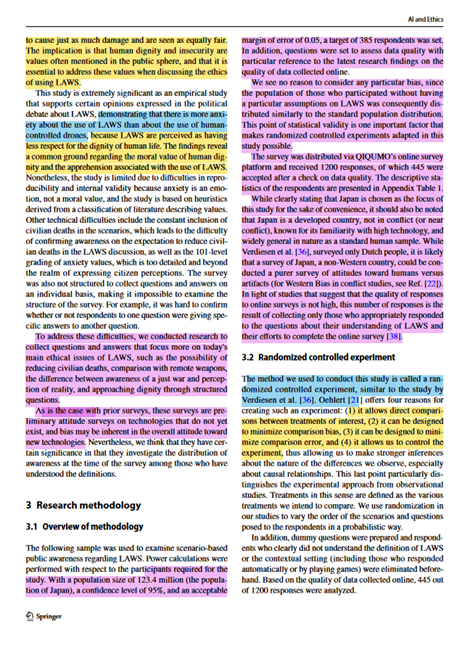
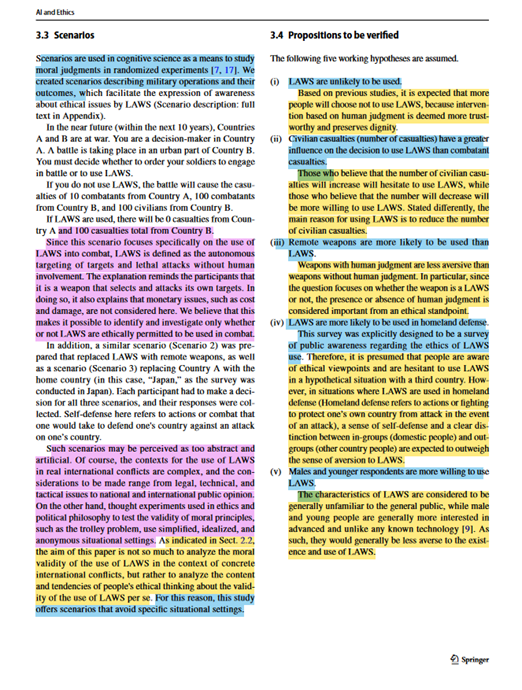
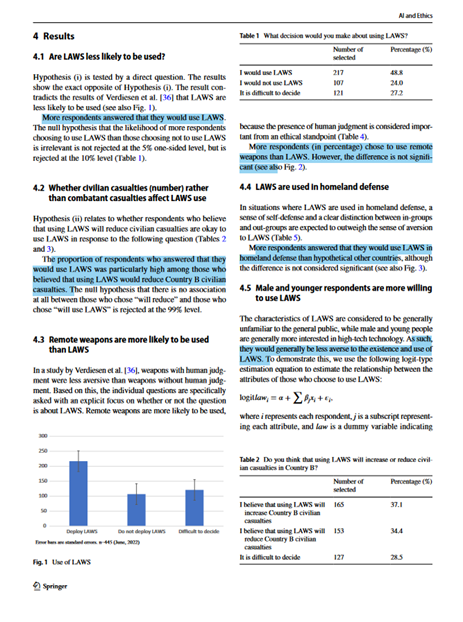
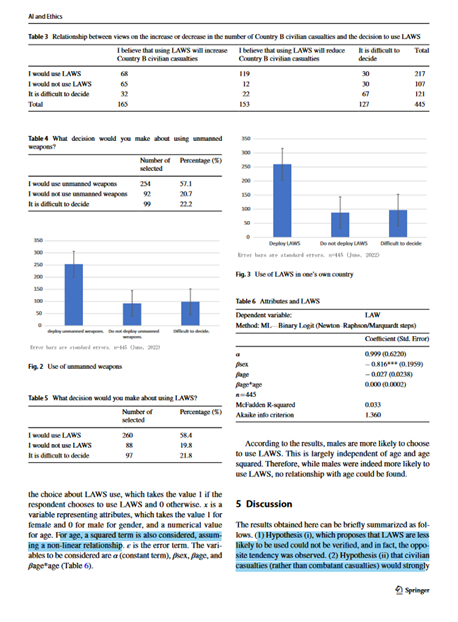
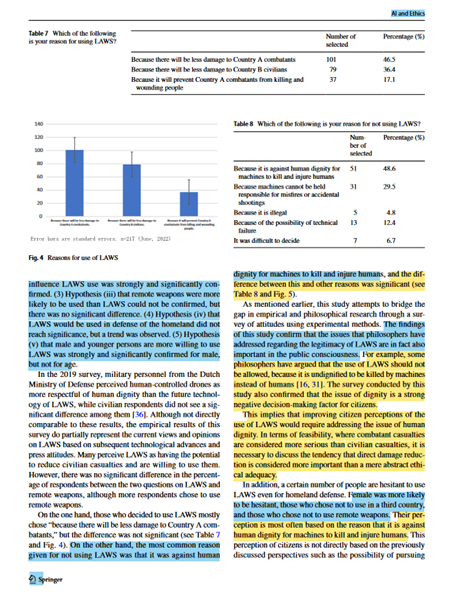
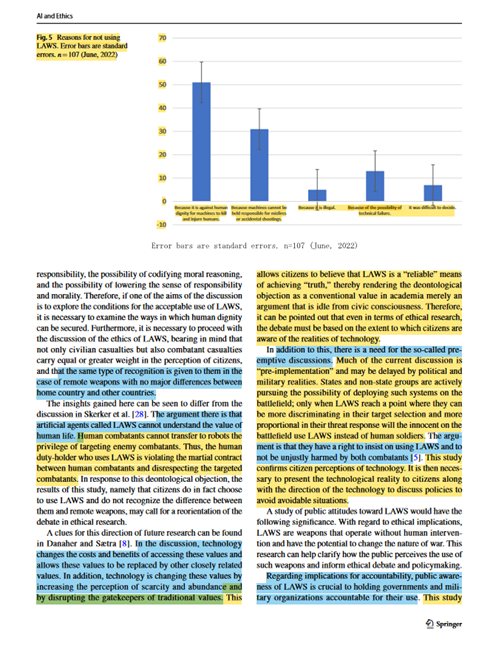
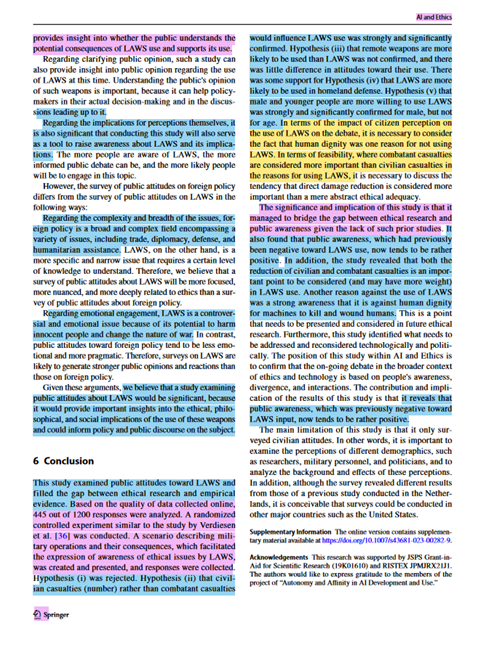
Meaning of the highlighted colours:
- Blue: main arguments/discussions/points
- Yellow: evidence/analysis/explanation
- Magenta: research approach
- Orange: Important facts
Annotated paper:
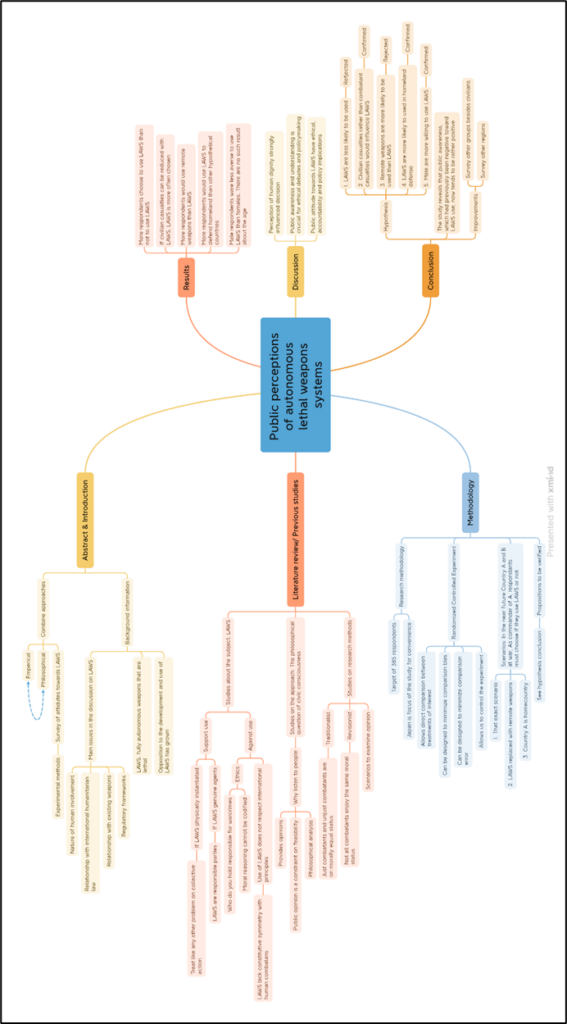
Annotate & Mindmap
Eventhough I do not often mindmap texts, I did notice that it was usefull for me. It really forces me to fully understand the text, because I need to formulate it in a different way. Besides that, it also gives a nice and clear summary in the end.
Transmedia Storytelling Plans
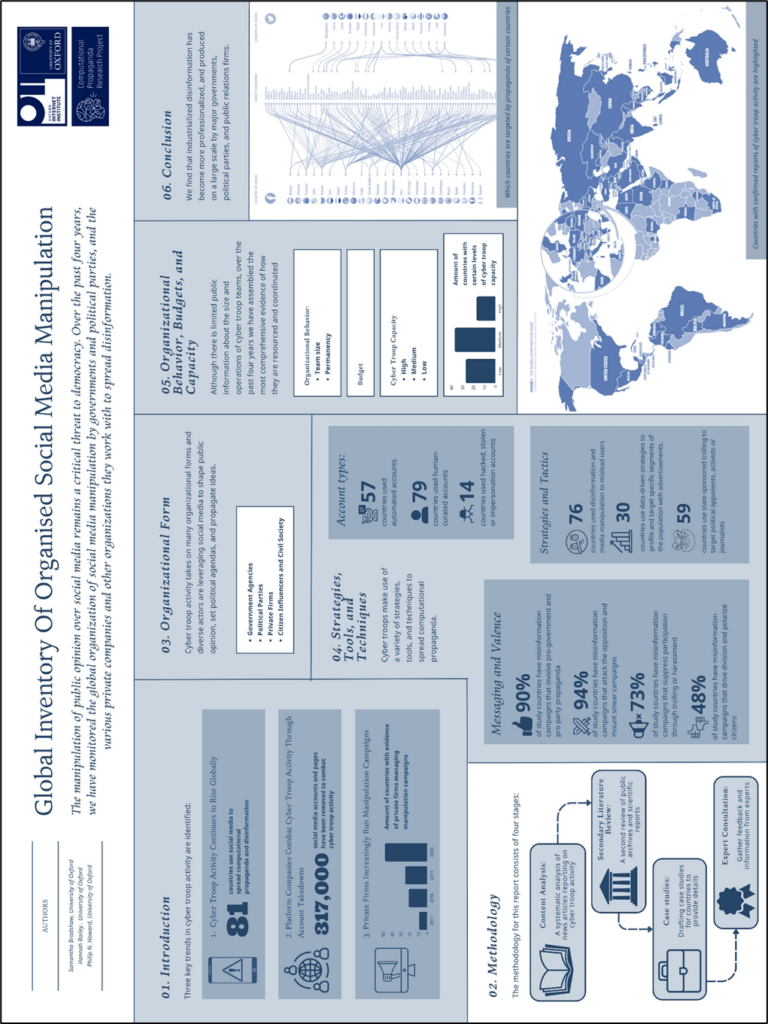
Plan for Acedamic Poster:
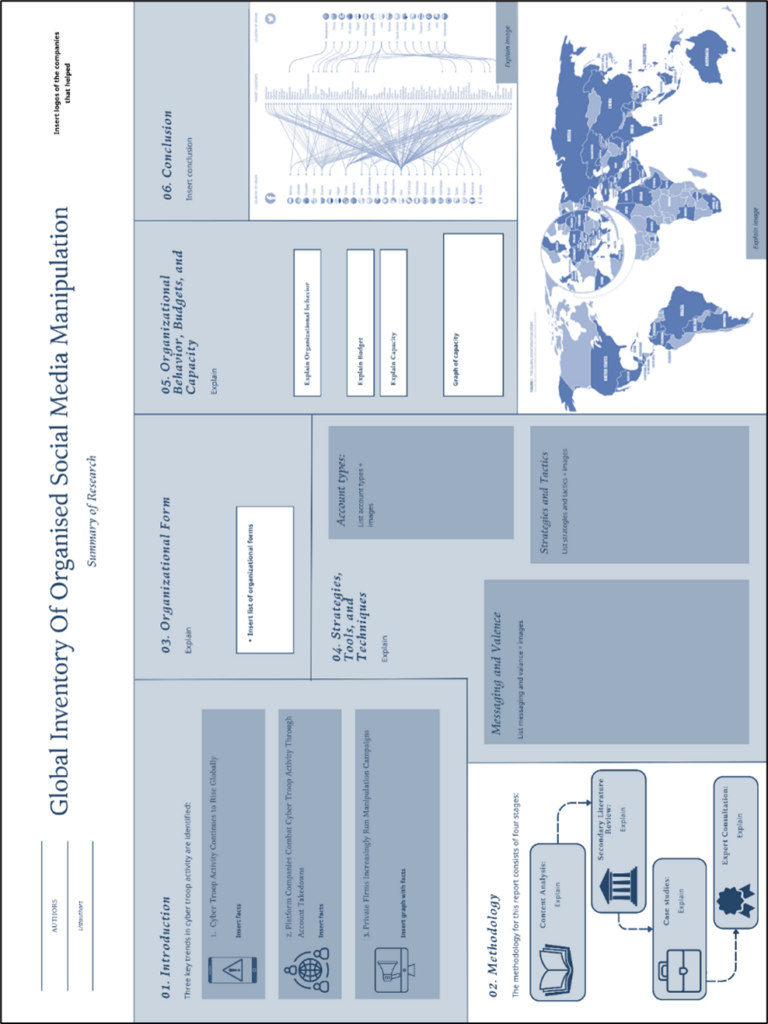
Final Poster:
Plan for Presentation:
| Slide: | Presentation: | Layout: |
| 1st slide: title page | Explain the main idea of the research and why it is relevant | Title, authors + background image |
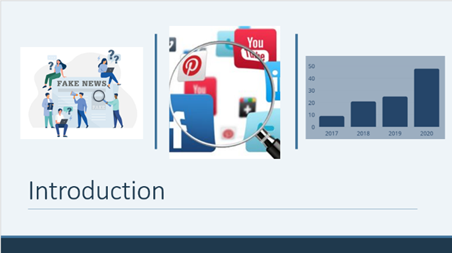
| 2nd slide: introduction | State that there are three key trends in cyber troop activity + facts and numbers surrounding these trends: Cyber troop activity continues to grow globallyPlatform companies combat cyber troop activity through account take downsPrivate firms increasingly run manipulation campaigns. | ‘Introduction’ + three images/graphs to represent the three trends/ show facts about them |
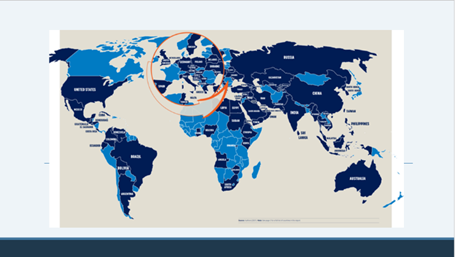
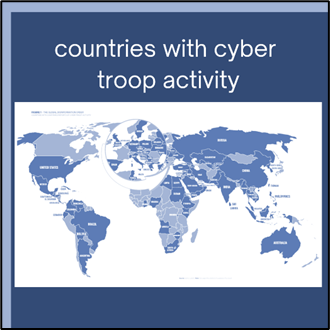
| 3rd slide: image (introduction) | Explain what can be seen in the image | Image highlighting countries where there is cyber troop activity |
| 4th slide: image (introduction) | Explain what can be seen in the image | Image showing which countries try to influence which countries via propaganda |
| 5th slide: methodology | State and explain the four stages of research in this report: Content analysisSecondary literature reviewCase studiesExpert consultation | ‘Methodology’ + images representing each stage of the research and arrows to showcase the connection and order of these stages |
| 6th slide: results – organizational form | State and explain the organizational forms that cyber troop activity can be in: Government agenciesPolitical partiesPrivate firmsCitizen influencers and civil society | ‘Organizational Form’ + images representing the different forms |
| 7th slide: results – strategies, tools, and techniques | State the topics that will be explored in the next three slides: Account typesMessaging and valenceStrategies and tactics | ‘Strategies, Tools, and Techniques’ + background image |
| 8th slide: results – account types | State and explain which account types are used and how often they occur: Automated accountsHuman-curated accountsHacked, stolen or impersonation accounts | ‘Account types’ + a graph representing how much each form is used |
| 9th slide: results – messaging and valence | State and explain what type of messaging and valence is used and how often they occur: Misinformation for pro-government/party propagandaMisinformation that attack oppositionMisinformation that suppresses participationMisinformation to create division and polarize citizens | ‘Messaging and Valence’ + a graph to show how often each type occurs |
| 10th slide: results – strategies and tactics | State and explain what type of strategies and tactics are used, and how often they occur: Disinformation and media manipulation to mislead usersData-driven strategies to target specific usersState-sponsored trolling | ‘Strategies and Tactics’ + a graph to show how often each type occurs |
| 11th slide: results –organizational behavior, budgets, and capacity | State and explain the following: Organizational behavior:Team sizePermanencyBudgetCyber Troop Capacity:High MediumLow | ‘Organizational Behavior, Budgets, and Capacity’ + image representing point 1 and 2 + graph for point 3 |
| 12th slide: conclusion | Explain the conclusion | ‘Conclusion’ + background image |
Example slide 2:
Example slide 4:
Plan for Social media (Instagram):
Outline for an Instagram post:
First slide:
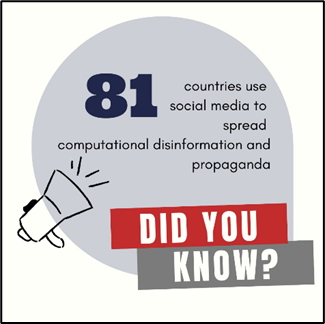
- interesting and catching fact
Following slides can include:
- explanation what part of the research the fact is related to
- background information
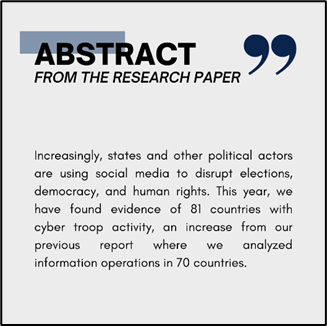
- abstract from the research paper
- relating images/graphs
Important! As people will often only see one post, instead of the whole series of posts, each individual post must make sense on its own
Content of the posts:
When looking at the whole feed (all posts together) there is a logical order. At the start posts will be an introduction to the research, followed by the methodology. Then the three main topicsy (Organizational form; Strategies, tools and techniques; Organizational behavior, budget and capacity) will be explored through a series of posts, each time presenting a ‘fun fact’ or interesting statistic on the first slide. In the last posts there will be a conclusion.
It is important that the posts are cohesive and interesting for the audience. The posts are meant to inform them about the problem of cyber troops, so it is useful to directly talk to the audience and call upon them to be more aware of their online activity.
Example slides for one post:

Reflection
Before the start of this semester I was not too sure how much I would like this module. Mostly because it appeared to be a repetition of what we had already studied in high school. However this turned out to be everything but true. I’ve discovered a lot of new things about the way we you can approach and conduct research this semester, and the best thing is that these new skills can also be applied to almost every other module.
The background information we were required to look at on the philosophy of research and the methods used by first-year students helped to my understanding of the value of this module. It really showed the complexities of doing proper research and the large amount of decisions that must be made. In specific, learning about research philosophy clearly pointed out how many underlying layers there are in conducting research. I would certainly be interested into learning more about some of these methods. On the other hand, the article about how first year college students conduct research, showed me how much I can still improve, in for example finding trustworthy and varying sources.
I believe that I have already made progress in that area by practicing finding different sources for the discussions, evaluating these sources using my own criteria, and having class discussions on sources. Now, when I look for sources, I do not just take the author into consideration, but also references, credibility, and timelessness. In addition, the locations I now search for knowledge have expanded beyond Google Search and now include articles found via Wikipedia references, videos, and physical libraries. I do believe that I still have a long way to go in terms of improving my ability to judge sources more effectively and locate useful information more quickly.
Even though the background information was extremely valuable, I genuinely enjoyed it when we started to analyse, mind map, and make plans. From the start, we selected three interesting topics. These topics, in my opinion, made it much easier to enjoy working on the discussions since, in addition to improving our research skills, we were gaining new information on topics we are genuinely interested in.
Although I’ve previously done text analysis and mind mapping, we certainly took a different approach. Learning to highlight a text by arguments and evidence, instead of just facts, really helped me to find the key points. Based on these properly highlighted texts it was undoubtedly simpler to create an effective mind map. The way we learned to make mind maps, by the structure of the text (including introduction, discussion, etc.), was entirely new for me. Therefore I am glad to have learned this way and it does truly help to provide a clear overview of the text. In the future I hope to be able to also analyse and mind map more complicated and poorly structured texts as I feel like I would still have some trouble with that.
Lastly, it was educational as well as fun to create the transmedia storytelling plans. I did notice that I found it difficult to first draft a plan, instead of immediately creating a finished result. This can be seen in the poster, which also displays the finished poster, since I occasionally started working on content of the poster instead of writing a plan first. For the following two plans, I put extra effort into just laying out my plan, and I believe the result is fairly good. As a result, I feel like my ability to properly plan a project before beginning it has gotten better. I like that these plans’ outcomes make it obvious that they are helpful in providing a good guideline for the finished product. In the future, I aim to be able to take a step back from projects to develop clear plans before starting to work on the final product.
Overall I believe I have learned a lot of useful information and skills in the past semester about research workflows, which I can build on in the future the further improve myself.